
Cesspit vs Septic Tank, Which System Is Right for Rural Properties?
If you live in a rural area without access to the mains sewer, choosing the right wastewater system is one of the most important decisions you’ll make for your property. Two common options are a cesspit (cesspool) and a septic tank, but they work very differently, and the long-term costs, maintenance requirements and environmental impact can vary massively depending on which one you install.
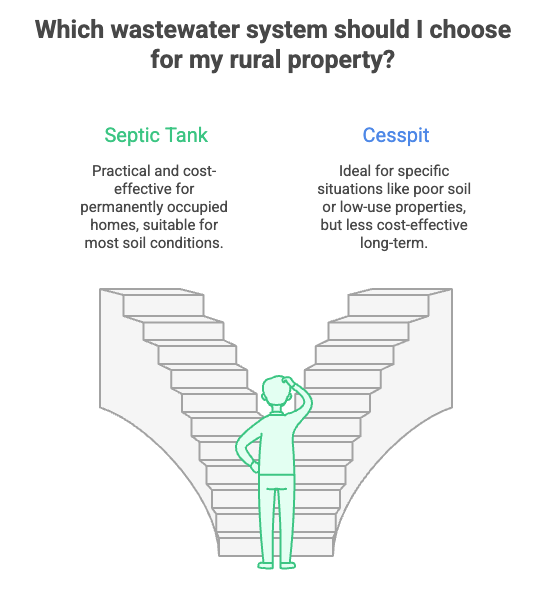
For most permanently occupied rural homes, a modern septic tank or small sewage treatment plant is usually the most practical and cost-effective solution. A cesspit, on the other hand, only makes sense in specific situations such as very poor soil conditions, high water tables, sensitive environmental areas, or low-use properties like holiday cabins or seasonal lets.
This guide breaks down how each system works, the pros and cons of both, and how to choose the right option for your rural home. Whether you’re upgrading an old system, planning a renovation, or buying a countryside property, understanding the difference is essential, and if you need help emptying or maintaining your system in Hereford, Monmouth or South Wales, Morgan’s Septic Tank Waste can support you.
How Each System Works (Key Differences)
A cesspit is the simplest type of off-grid wastewater system, but also the one that requires the most maintenance. It is a sealed underground tank with no outlet at all, meaning every litre of wastewater from the property, from toilets, sinks, showers, washing machines and dishwashers, is stored inside until a tanker empties it. Because no part of the waste drains away or breaks down naturally, cesspits fill quickly and typically need emptying every few weeks.
A septic tank, by contrast, is a treatment system, not a storage tank. Inside the tank, solids settle to the bottom while natural bacteria begin breaking them down. The clearer liquid on top then flows out into a soakaway or drainage field, where it undergoes further natural filtration through the soil. Because the wastewater is partially treated and discharged instead of stored, a septic tank fills far more slowly and usually only needs desludging every three to five years.
Both systems are used in rural or off-grid locations where a mains sewer connection isn’t available. However, the way they function is fundamentally different, and that difference has big implications for running costs, environmental compliance and long-term suitability for full-time homes.
Pros and Cons of Cesspits
Cesspits can work well in certain rural situations, but they also come with some of the highest long-term running costs of any off-mains system. Here’s a clear breakdown to help homeowners understand when they are and aren’t the right choice.
Pros and Cons of Cesspits
Simple installation
A cesspit is essentially a single sealed tank buried underground. Because it doesn’t need a drainage field, percolation tests or discharge pipework, installation can be quicker and far easier on awkward or restricted sites.
Suitable where discharge isn’t possible
In areas with very poor soil conditions, high groundwater, clay-heavy land or environmentally sensitive locations, a soakaway may be impossible or prohibited. In these cases, a cesspit may be the only legally viable solution since it stores all wastewater without releasing anything into the ground.
Ideal for low-use or temporary properties
For holiday cottages, seasonal cabins, static caravans or temporary sites like construction areas, wastewater volumes are usually much lower. This makes the frequent emptying demands of a cesspit more manageable and cost-effective.
Disadvantages of Cesspits
Very high running costs
Because a cesspit collects all wastewater with no discharge or treatment, it fills rapidly. Full-time homes often need emptying every 4–6 weeks, sometimes even more frequently, which becomes extremely expensive over the course of a year.
Higher environmental risks if mismanaged
A neglected cesspit can overflow or leak, releasing raw sewage into soil or nearby water. This poses major environmental and health hazards and can lead to enforcement action or costly remediation.
Increasingly restricted or discouraged
Local authorities and environmental agencies often discourage new cesspit installations due to pollution risks. In some areas, they are heavily regulated or approved only in very specific circumstances.
Pros and Cons of Septic Tanks
Septic tanks remain one of the most common off-mains drainage solutions for rural homes, especially those used full-time. They offer long-term reliability and lower operating costs, but they do require a suitable site and adherence to regulations.
Advantages of Septic Tanks
Lower long-term costs
Because a septic tank treats and discharges wastewater rather than storing it, it fills far more slowly. Most tanks only need desludging every three to five years, making them significantly cheaper to operate than cesspits.
More environmentally friendly
A septic tank separates solids and allows natural bacterial treatment before releasing the effluent into a soakaway. This process greatly reduces pollution risks when compared with a sealed storage system.
Long service life
A well-installed and maintained septic tank can last for decades. For most rural homes, it provides a stable, sustainable, and long-term wastewater solution.
Disadvantages of Septic Tanks
Higher upfront installation cost
A septic tank requires more components, including a soakaway or drainage field, which increases the initial investment compared with a single-tank cesspit.
Requires suitable land and soil conditions
Not every property can support a drainage field. Heavy clay, shallow bedrock, or high groundwater may make discharge impossible, ruling out a septic system entirely.
Subject to regulatory controls
Discharging effluent to ground is tightly regulated. Homeowners must comply with environmental rules, permits and, in many cases, the UK’s General Binding Rules. Regular maintenance and responsible system use are essential to remain compliant.
Which System Suits Which Rural Property?
Choosing between a cesspit and a septic tank isn’t just about cost, it’s about the type of property, how often it’s used, the land it sits on, and what local regulations will allow. Here’s how each system fits into real-world rural scenarios.
Full-time family homes with suitable land
For most permanently lived-in rural properties with enough outdoor space and reasonable soil, a septic tank or small sewage treatment plant is almost always the best long-term choice. It offers lower running costs, far fewer tanker visits, and better environmental protection over the lifespan of the home. This makes it the most practical solution for everyday wastewater needs.
Properties with very poor ground conditions
Some rural sites simply cannot support a drainage field because the soil is too dense, the water table is too high, or there’s no safe place to disperse effluent. In these cases, a cesspit may be the only realistic option, because it doesn’t discharge anything into the ground. Although operating costs are higher, a sealed storage system may be the only compliant installation.
Holiday cottages, cabins or low-occupancy homes
Cesspits can work well for properties with intermittent or seasonal use, where wastewater volumes are low. A holiday cottage with guests only part of the year, for example, may only need emptying occasionally, making a cesspit more manageable. However, if budgets allow and the land is suitable, a septic tank or treatment plant will still be more cost-effective in the long run.
Environmentally sensitive rural sites
In protected areas, near watercourses, or locations with strict environmental rules, regulators may insist on either:
a high-standard treatment system with advanced effluent quality, or
a sealed cesspit if any discharge is considered too risky.
Local drainage advice is essential here, as requirements vary and permissions may be needed.
Properties being upgraded or modernised
Older cesspits can be expensive and difficult to maintain, so many homeowners choose to upgrade to a septic system or treatment plant when improving or extending their rural property, provided ground conditions allow it.
Cost, Regulation and System Comparison Table
Below is a clear comparison to help homeowners understand how cesspits and septic tanks differ in cost, environmental impact and suitability. The wording mirrors your research but is rewritten uniquely for your blog.
| Aspect | Cesspit (Cesspool) | Septic Tank / Treatment Plant |
|---|---|---|
| Core function | Stores all wastewater with no treatment or discharge. | Separates solids and biologically treats wastewater before releasing effluent into a drainage field. |
| Typical use | Rural sites where no discharge is possible; low-use or temporary properties. | Permanent rural homes with suitable land and soil drainage. |
| Installation cost | Generally cheaper (single sealed tank, minimal pipework). | Higher (tank + soakaway + appropriate groundwork). |
| Running cost | High, frequent emptying, often every 4–8 weeks for full-time homes. | Low, desludging typically every 3–5 years. |
| Environmental impact | High if neglected; overflow or leakage releases raw sewage. | Lower treated effluent and controlled discharge reduce pollution risk. |
| Regulatory stance | Often discouraged or tightly controlled; some areas limit new cesspit installs. | Widely accepted but regulated under UK discharge and permitting rules. |
| Space required | Minimal = no drainage field needed. | More requires adequate land for soakaway or drainage field. |
| System appearance | Usually one manhole cover; fills quickly. | Multiple covers for chambers and inspection points; fills slowly. |
How to Tell Which System You Already Have
Many rural homeowners aren’t entirely sure whether they have a cesspit or a septic tank, especially if they’ve recently moved in or the property has older drainage infrastructure. Fortunately, there are a few simple ways to identify the system without specialist tools.
Check how often it needs emptying
If your tank requires frequent tanker visits, often every few weeks, it is almost certainly a cesspit. A septic tank, on the other hand, only needs desludging every few years.
Look for a drainage field or soakaway
Septic tanks always discharge treated effluent into the ground, which means there will be a drainage field, perforated pipes, or inspection points somewhere on the property. If there is no discharge pipework at all, it’s likely a sealed cesspit.
Number and layout of manhole covers
Cesspit: usually has a single main access cover because it is only a storage tank.
Septic tank: typically has multiple covers for separate chambers and inspection points, plus access to the drainage field.
Check your property paperwork
Older installation records, deeds, planning permissions or drainage surveys (such as CCTV inspections) will often specify which system is present and its size.
Look at how quickly levels rise
If you can access the inspection point safely, rising waste levels after normal household use will give clues. A cesspit fills continuously and quickly, whereas a septic tank maintains relatively stable liquid levels due to its discharge system.
If homeowners are ever unsure, a quick professional inspection can confirm the system type, which is essential before planning upgrades or complying with UK regulations.
Upgrading, Switching or Installing a New System
Choosing the right wastewater system is especially important for rural homes, and many older properties still rely on legacy cesspits that are expensive and difficult to maintain. In many cases, upgrading to a modern septic tank or treatment plant brings significant long-term benefits.
When to consider upgrading from a cesspit
You may want to upgrade if:
The cesspit is costing too much to empty regularly.
You’re planning an extension, renovation or increased occupancy.
The existing tank is old, difficult to access, or showing signs of wear.
Local regulations are changing and encouraging more sustainable systems.
Your property has enough space and suitable soil for a drainage field.
A septic tank or package treatment plant drastically reduces ongoing costs and is far more suitable for permanent residential use.
When a cesspit may still be the right option
Some properties simply cannot support a drainage field due to:
high groundwater
clay-heavy or non-permeable soil
proximity to watercourses
environmental sensitivity or regulatory restrictions
In these situations, a sealed cesspit may be the only compliant option, though owners must budget for regular emptying and tight monitoring.
New installations on rural land
If you’re building or renovating a rural property, the choice typically comes down to:
Septic tank / treatment plant → best for long-term, full-time occupancy
Cesspit → best for difficult ground conditions or low-use situations
A percolation test and site assessment will determine whether discharge is allowed and what size system is needed. Working with a professional drainage company ensures compliance with environmental rules and avoids costly mistakes.
Need help choosing the right system?
Morgan’s Septic Tank Waste supports homeowners across Herefordshire, Monmouthshire and South Wales, whether you need cesspit emptying, advice on your current system, or guidance on upgrading to a more suitable rural drainage solution.
The Bottom Line
Choosing between a cesspit and a septic tank is a major decision for any rural property owner, and the right choice depends on how your home is used, the condition of your land, and the regulations that apply in your area. For most full-time rural homes with suitable soil, a septic tank or small treatment plant is the most practical and cost-effective long-term option. It offers low running costs, strong environmental performance and far fewer maintenance demands.
Cesspits, meanwhile, serve a specific purpose. They work well on difficult ground, in environmentally sensitive locations, and on low-use or seasonal properties, but they come with high ongoing costs and stricter responsibilities.
Whichever system you have or plan to install, regular maintenance, proper emptying, and compliance with UK regulations are essential.
Get In touch
Contact Morgan’s Septic Tank Waste today for a free quote or to schedule your service.
Frequently Asked Questions About Cesspits and Septic Tanks
What’s the main difference between a cesspit and a septic tank?
A cesspit is a sealed storage tank that holds all wastewater until it’s emptied.
A septic tank treats wastewater and discharges the liquid into a drainage field. This makes septic tanks far more cost-effective for full-time use.
Which system is cheaper to run?
A septic tank is significantly cheaper long-term. It usually needs desludging every 3–5 years, while a cesspit may need emptying every 4–8 weeks for a full-time home.
Can I replace my cesspit with a septic tank?
Often yes — as long as your property has suitable soil and enough land for a drainage field. A site survey and percolation test are required to confirm this.
Are cesspits still legal in the UK?
Yes, but they are heavily regulated and often discouraged for full-time homes. They must be regularly emptied and kept watertight to prevent pollution.
Do septic tanks need much maintenance?
Not a huge amount, but they do require sensible use, periodic desludging, and compliance with discharge rules. Blockages, root ingress, or incorrect use can cause failures.
Which system is better for holiday cottages or seasonal properties?
Cesspits can work for low-use or intermittent properties, where wastewater levels stay low. For frequent or year-round use, a septic tank or treatment plant is usually better.