
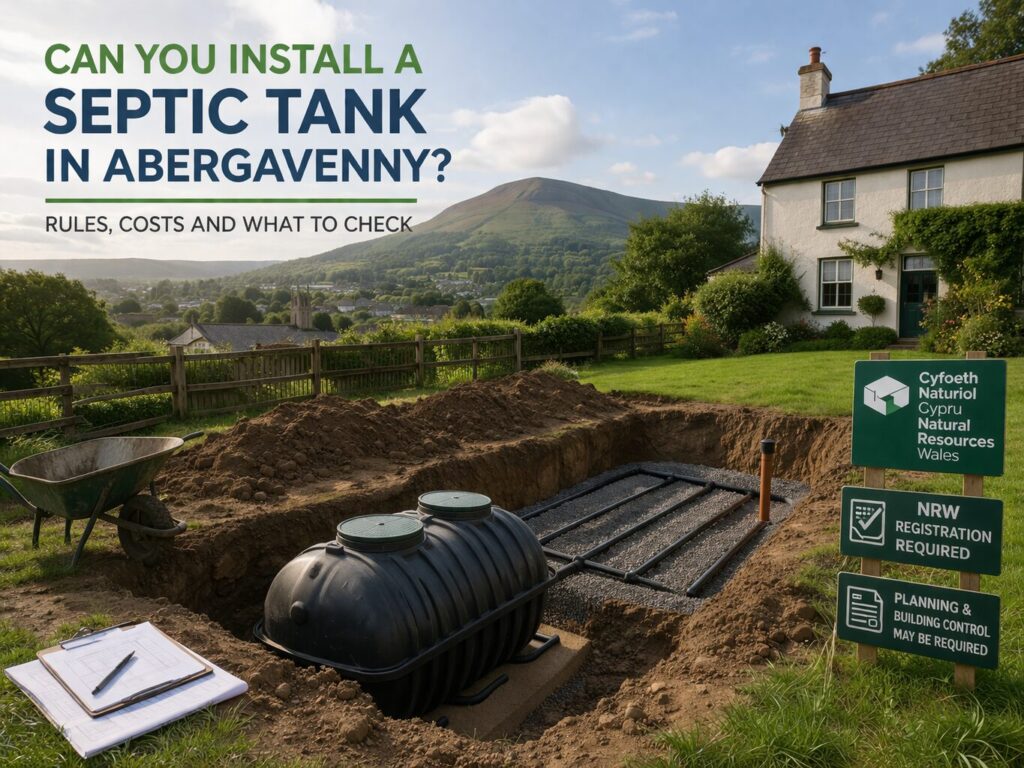
Can You Install a Septic Tank in Abergavenny? Rules, Costs and What to Check
If you’re planning a new drainage system for a property in Abergavenny, one of the first questions you’ll ask is simple: can you install a septic tank here?
In many cases, the answer is yes – especially for rural homes that are not connected to the mains sewer. However, installing a septic tank is not just a case of choosing a tank and putting it in the ground. You need to make sure the system is legally allowed, properly designed, and suitable for your land.
Before anything is installed, you’ll need to check whether a mains sewer connection is available, whether your site can support a drainage field, and whether your system can be registered or permitted with Natural Resources Wales.
In this guide, we’ll walk through the rules, costs and key checks so you can understand exactly what’s involved before starting a septic tank installation in Abergavenny.
Can You Legally Install a Septic Tank in Abergavenny?
Before planning any installation, you need to confirm that a septic tank is actually allowed on your property.
Check if you can connect to the mains sewer
The first step is to find out whether your property can connect to a public sewer. If a connection is reasonably available, this is often the preferred option, and in some cases you may be expected to use it instead of installing a private system.
Planning permission and building regulations
Installing a new septic tank or changing your drainage system usually requires building regulations approval, and in many cases planning permission as well. Local planning applications in Monmouthshire include drainage as a key consideration, which shows how important it is to get this right from the start.
Registration or permit with Natural Resources Wales
In Wales, you must register your septic tank or apply for a permit depending on your situation. Whether you qualify for simple registration depends on several factors. For full guidance, see the general binding rules for small sewage discharges.
Wales Rules You Need to Know Before Installing
Installing a septic tank in Wales comes with specific rules that go beyond general UK guidance. Before going ahead, you need to understand how Natural Resources Wales (NRW) regulates private drainage systems.
Registration with Natural Resources Wales
Most septic tanks and small sewage systems in Wales must be registered with NRW. This applies to systems that discharge to the ground and meet certain conditions.
Registration is usually straightforward if your system is correctly designed and located, but you must still check that your setup qualifies.
When you need a permit instead
Not all systems can be registered. In some cases, you will need to apply for an environmental permit instead.
This typically applies if your property is:
- in a protected area such as Source Protection Zone 1
- close to a drinking water supply such as a well or borehole
- in a location where there is a higher risk of pollution
When registration may not be approved
If your site or system does not meet NRW conditions, registration can be refused. This may mean you need to redesign the system or consider an alternative solution.
Is Your Land Suitable for a Septic Tank?
Even if a septic tank is legally allowed, it will only work properly if your land is suitable.
Why soil and drainage matter
Septic tanks rely on a drainage field to treat wastewater after it leaves the tank. This means the ground must be able to absorb and filter the liquid safely.
If the soil drains too slowly or becomes waterlogged, the system can fail and cause pollution.
Percolation testing
A percolation test is used to measure how quickly water drains through the soil. This test helps determine whether a drainage field is viable and how large it needs to be.
Without this step, you risk installing a system that simply won’t work long term.
Space and layout requirements
You also need enough space for a properly designed drainage field, positioned in line with regulations. The system must be located far enough from buildings, boundaries and water sources to reduce risk.
How Much Does Septic Tank Installation Cost in Abergavenny?
The cost of installing a septic tank in Abergavenny can vary quite a bit depending on the site, but most of the expense comes from groundworks and drainage, not just the tank itself.
Typical cost breakdown
A full installation usually includes:
- the septic tank itself
- excavation and groundwork
- drainage field installation
- labour and materials
Example costs
UK price guides give a rough idea of what to expect:
- Percolation test: around £100 to £300
- Drainage field: typically £1,000 to £2,500 or more
- Full installation: can increase significantly depending on excavation and site conditions
What affects the price
Costs will depend on:
- ground conditions and soil type
- access for machinery
- size of the system
- amount of excavation required
What to Check Before Installing a Septic Tank
Before committing to an installation, there are a few key checks that every homeowner in Abergavenny should make.
- Can you connect to the mains sewer
- Is your land suitable for a drainage field
- Do you need planning permission or building regulations approval
- Can your system be registered with NRW
- Is there enough space for the system to be installed correctly
Taking the time to check these points early can prevent delays, redesigns or costly mistakes later on.
Maintenance After Installation
Installing a septic tank is only the first step. Ongoing maintenance is essential to keep the system working properly and to stay compliant with Welsh regulations.
Regular emptying
Septic tanks need to be emptied regularly to remove sludge and prevent it from building up inside the system. In most cases, this should be done every 1 to 2 years.
Ongoing checks
Homeowners should also keep an eye on how the system is performing. This includes:
- checking for slow drains or smells
- monitoring the drainage field
- watching for signs of waterlogging
Keeping records
Natural Resources Wales recommends keeping records of maintenance and emptying for at least five years. This helps demonstrate that your system is being properly managed.
When a Septic Tank May Not Be Suitable
A septic tank is not always the right solution, even if you are off the mains sewer.
When installation may not be possible
You may not be able to install a septic tank if:
- the ground cannot support a drainage field
- the site is too close to a water source
- the property is located in a protected area
- the system cannot be registered with NRW
Alternative options
In these situations, you may need to consider other systems such as:
- a sewage treatment plant
- a cesspit
Cesspits are storage-only systems and require much more frequent emptying, so it’s important to understand the long-term maintenance involved.
Installing a septic tank in Abergavenny is possible for many properties, but only if the right conditions are met.
Before going ahead, you need to make sure:
- a mains sewer connection is not practical
- your land can support a drainage field
- the system meets NRW registration or permit requirements
- planning and building regulations are in place
Taking the time to check these factors properly will help you avoid costly mistakes and ensure your system works effectively for years to come.
If you’re unsure where to start, speaking to a specialist can help you plan everything correctly from the beginning.
Get In Touch
Contact Morgan’s Septic Tank Waste for any questions regarding septic tank installations in Abergavenny
Frequently Asked Questions
Can I install a septic tank anywhere in Abergavenny?
No. The site must be suitable, with the right soil conditions and enough space for a drainage field, and it must meet NRW and planning requirements.
Do I need planning permission for a septic tank?
In most cases, yes. New installations or major changes to drainage usually require planning permission as well as building regulations approval.
How much does septic tank installation cost?
Costs vary depending on the site, but percolation testing is typically £100 to £300 and drainage fields can cost £1,000 to £2,500 or more.
What if my property is near a well or borehole?
You may not qualify for simple registration and could need a permit. Additional restrictions often apply in these locations.
Do I need to register my septic tank in Wales?
Yes. Most systems must be registered with Natural Resources Wales or require a permit depending on the discharge and location.
What if I can connect to the mains sewer?
If a public sewer is reasonably available, it may be the preferred or required option instead of installing a septic tank.