Cesspit Problems in Abergavenny: Signs You Need Urgent Emptying
Cesspits need much closer attention than most people realise. Unlike septic tanks, they do not treat waste at all. They simply store everything that comes from your property, which means they can fill up quickly and cause problems if they are not emptied on time.
For homeowners in Abergavenny, this makes it especially important to recognise the early warning signs. What often starts as slow drainage or a slight smell can quickly turn into overflow, leaks or even contamination if left too long.
The key is acting early. In most cases, cesspit problems are not complicated. They are simply a sign that the tank is reaching capacity and needs emptying.
In this guide, we will walk through the main signs to look for and what to do before the situation becomes urgent.
What Is a Cesspit and Why Does It Fill So Quickly?
Before looking at the warning signs, it helps to understand how a cesspit works and why problems can develop faster than expected.
How a cesspit works
A cesspit is a sealed underground tank that collects all wastewater from your property. This includes water from toilets, sinks, showers and appliances.
Unlike a septic tank, there is no treatment process. Nothing is broken down or filtered. Everything stays inside the tank until it is removed.
Why capacity is limited
Because there is no treatment, a cesspit will fill up much faster than other systems. Its capacity is fixed, and once it reaches that limit, there is nowhere for the wastewater to go.
This is why regular emptying is essential. Missing a scheduled empty can quickly lead to the tank becoming full.
Why missed emptying causes urgent problems
Most cesspit emergencies are caused by one simple issue: the tank has been allowed to fill too much.
When this happens, you can start to see:
- slow drainage inside the property
- pressure building in the pipes
- early signs of overflow
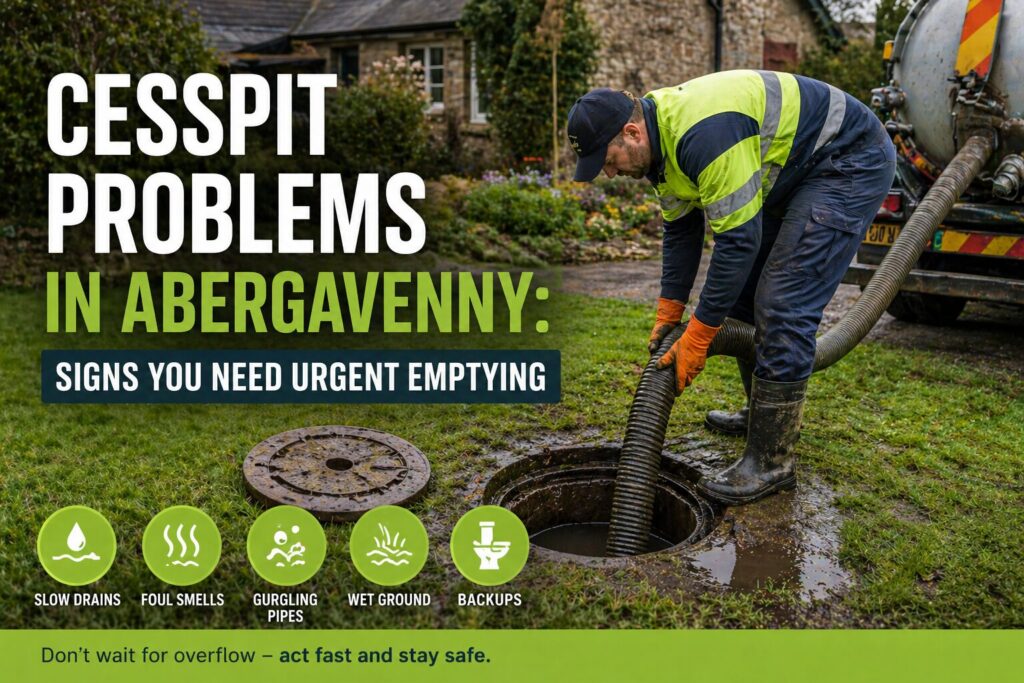
Signs Your Cesspit Needs Urgent Emptying
Cesspits usually give clear warning signs before they become a serious problem. The key is recognising these early and acting quickly.
Slow drains and backing up water
One of the first signs is water draining more slowly than usual. You might notice sinks, baths or toilets taking longer to empty, or even backing up slightly.
Foul smells around your property
Unpleasant odours near drains, outside the property, or around the cesspit cover often mean the tank is close to full or struggling to cope.
Gurgling pipes and toilets
If you hear gurgling sounds when using sinks or flushing toilets, it can indicate pressure building in the system as the cesspit reaches capacity.
Standing water or soggy ground
Water pooling around the tank area or nearby ground becoming soft and wet is a strong sign that the cesspit may be overflowing or leaking.
Unusually lush or green grass
If the grass around your cesspit looks greener or grows faster than the rest of your garden, it can mean wastewater is seeping into the soil.
These signs often appear gradually, but if you notice several at the same time, the situation should be treated as urgent.
What Causes Cesspit Problems?
Most cesspit issues come down to a few common causes, many of which are easy to avoid with regular maintenance.
Overfilling and delayed emptying
The most common cause is simply letting the tank fill up too much. Because cesspits do not treat waste, they rely entirely on regular emptying to keep working properly.
Flushing unsuitable items
Items like wipes, grease and non-biodegradable waste can build up inside the tank and reduce the available space more quickly.
Blocked pipes or damage
In some cases, problems may also be caused by blocked pipework or damage to the tank or lid. However, even in these situations, if the cesspit is near capacity, emptying is still the immediate priority.
Most issues still come back to the tank reaching capacity. For more detail, see how often a cesspit should be emptied.
Why Cesspit Problems Should Never Be Ignored
Cesspit issues can escalate quickly. What starts as a minor inconvenience can turn into a serious problem in a short space of time.
Risk of overflow and contamination
If a cesspit becomes too full, wastewater has nowhere to go. This can lead to overflow, which may contaminate the surrounding soil and potentially nearby water sources.
Health and hygiene concerns
Overflowing or leaking wastewater creates obvious hygiene risks. Strong smells, bacteria and exposure to waste can affect both your home and the surrounding environment.
Damage to your property and land
Standing water and saturated ground can damage lawns, gardens and even nearby structures. Over time, this can lead to more expensive repairs beyond just emptying the tank.
Overflow and leakage should always be treated as urgent issues due to the risks involved. For more detail, see these cesspit overflow risks and environmental impact.
What to Do If You Notice These Signs
If you start to notice warning signs, acting quickly is the best way to prevent the situation from getting worse.
Reduce water use immediately
Try to limit how much water is going into the system. Avoid running washing machines, dishwashers or anything that adds large volumes of water.
Avoid flushing anything extra
Do not flush wipes, food waste or anything unnecessary while the system is under pressure. This can make the problem worse very quickly.
Arrange professional emptying
The most important step is to get the cesspit emptied as soon as possible. This removes the immediate risk and allows the system to return to normal.
Can a Cesspit Problem Be Something Else?
Not every drainage issue is caused by a full cesspit, but in many cases, it is the first thing to check.
Other possible causes
Problems like slow drains or smells can sometimes be linked to:
- blocked pipework
- drainage issues elsewhere in the system
- localised plumbing faults
Why location matters
If the smell or issue is strongest near the cesspit, drains, or surrounding ground, it is much more likely that the cesspit is the source.
When to get it checked
If you are unsure, it is always better to act early. A professional can quickly confirm whether the issue is related to the cesspit or something else.
Get In touch
Cesspits are simple systems, but they require careful attention. Because they only store waste, they can fill up quickly and cause problems if they are not emptied on time.
The warning signs are usually clear. Slow drains, smells, wet ground and unusual changes around your property should never be ignored. Acting early can prevent overflow, damage and more serious issues.
If you are in Abergavenny and noticing any of these signs, the safest approach is to deal with it straight away rather than waiting for the problem to get worse.
If you think your system may be full, arranging cesspit emptying in Abergavenny as soon as possible can help avoid costly and unpleasant problems.
Frequently Asked Questions
How do I know if my cesspit needs emptying urgently?
Look for slow drains, strong smells, gurgling pipes, wet ground or signs of wastewater backing up. If more than one of these appears, it should be treated as urgent.
Is standing water always a cesspit problem?
Not always, but if it appears near the cesspit or drainage area, it is a strong sign that the system may be full or leaking.
Can I wait a few days if my cesspit is full?
No. A full or overflowing cesspit can quickly become a health and environmental issue, so it should be dealt with immediately.
Can bad smells come from something else?
Yes, but if the smell is strongest near drains or the tank area, the cesspit is likely to be the cause.
Should I inspect the cesspit myself?
It is not recommended. Cesspits can release harmful gases, so it is safer to let a professional handle inspection and emptying.