Do I Need to Replace My Septic Tank in Abergavenny? Signs to Look For
Looking after a septic tank in Abergavenny is not complicated, but it does require consistency. Most of the serious and expensive problems people run into come down to a few simple issues that have been left too long.
The good news is that with the right habits, you can keep your system running smoothly for years. Regular emptying, careful water use and keeping an eye on early warning signs all play a big part in avoiding breakdowns.
In Wales, there is also a responsibility to make sure your system is properly maintained and does not cause pollution. That means staying on top of maintenance is not just about avoiding costs, it is about staying compliant too. Regular maintenance starts with the basics, such as arranging septic tank emptying in Abergavenny at the right intervals.
In this guide, we will walk through the practical steps you can take to maintain your septic tank and reduce the risk of costly repairs.
Signs Your Septic Tank May Need Replacing
One of the most important parts of septic tank maintenance is knowing how often it needs to be emptied and checked.
Recommended emptying frequency
For homeowners in Abergavenny, the safest approach is to follow Welsh guidance. Septic tanks should usually be emptied every 12 to 24 months by a registered contractor.
Leaving it longer than this allows sludge to build up inside the tank. Over time, this can start to affect how the system works and increase the risk of problems further down the line. For more detail on recommended maintenance, see the Natural Resources Wales septic tank maintenance guidance.
Why regular emptying matters
Septic tanks are designed to separate waste, with solids settling at the bottom and liquids flowing out to the drainage field. If the tank is not emptied regularly, those solids can begin to escape into the system.
This can lead to:
- blocked pipes
- damage to the drainage field
- slow drains and backups
- expensive repairs
Monthly drainage field checks
In addition to emptying, it is important to check your drainage field regularly. A quick monthly check can help you spot early warning signs such as:
- standing water
- soggy ground
- unusual smells
Catching these issues early can make a big difference and help you avoid more serious system failures.
What You Should Never Flush or Pour Down the Drain
What goes into your septic tank has a direct impact on how well it works. One of the most common causes of problems in Abergavenny homes is flushing or pouring the wrong things down the drain.
Common items to avoid
You should never put the following into your septic system:
- wipes and baby wipes
- nappies and sanitary products
- cotton buds
- fats, oils and grease
- food waste
- harsh cleaning chemicals
These items do not break down properly and can quickly build up inside the tank.
Why these cause problems
Septic tanks rely on natural bacteria to break down waste. When non-biodegradable items or chemicals enter the system, they can:
- block pipes and outlets
- reduce the effectiveness of the bacteria
- push solids into the drainage field
- shorten the life of the system
Over time, this can lead to slow drains, smells and even full system failure.
Managing Water Use to Protect Your System
It is not just what you put into your septic tank that matters, but also how much water goes through it.
Why too much water is a problem
Septic tanks need time to separate solids from liquids. If too much water enters the system too quickly, it can push solids through before they have settled properly.
This increases the risk of:
- blocked drainage pipes
- damage to the soakaway
- system overload
Simple ways to reduce pressure on your system
There are a few easy ways to manage water use in your home:
- spread out washing machine loads across the week
- fix dripping taps and running toilets quickly
- install water-efficient fixtures where possible
- avoid emptying large volumes of water at once
Making small changes like these can significantly reduce the strain on your septic system over time.
How to Protect Your Drainage Field
Your drainage field is one of the most important parts of your septic system. If it fails, the whole system can stop working properly.
Keep surface water away
Rainwater from roofs, gutters and driveways should never be directed into your septic system. Too much water entering the drainage field can quickly lead to saturation and failure.
Avoid compacting the ground
The drainage field needs loose, well-draining soil to work effectively. Driving over it or placing heavy objects on top can compact the ground and reduce its ability to absorb wastewater.
Avoid placing:
- vehicles
- sheds or buildings
- heavy garden features
Check for early warning signs
It is a good idea to visually check your drainage field every month. Look out for:
- standing water
- soggy or soft ground
- strong smells
- unusually green patches of grass
Catching these early can help you avoid much bigger issues later on. If you are unsure about the condition of your system, arranging CCTV drain surveys in Abergavenny can help identify problems early.
Warning Signs Your Septic Tank Needs Attention
Even with good maintenance, it is important to recognise when something is starting to go wrong.
Slow drains and gurgling
If sinks, toilets or showers are draining slowly, or you hear gurgling sounds, it may be a sign the system is under pressure.
Foul smells around your property
Unpleasant odours near the tank or drainage field often indicate that waste is not being treated properly.
Wet patches or lush grass
If parts of your garden are consistently wet or growing faster than others, this can point to drainage field issues.
Act early to avoid major problems
The key with septic tanks is acting early. Small issues are usually much easier and cheaper to fix than full system failures.
Safe and Legal Septic Tank Servicing
Maintaining your septic tank is not just about keeping it working properly. It also needs to be done safely and in line with regulations.
Use a registered contractor
Septic tanks should always be emptied by a registered waste carrier. This ensures the waste is handled and disposed of correctly.
Keep maintenance records
It is good practice to keep a simple record of:
- when the tank was emptied
- who carried out the work
- any issues identified
These records can be useful if problems arise or if you plan to sell your property in the future.
Do not open the tank yourself
Septic tanks contain harmful gases and bacteria. Opening the tank without the right equipment and experience can be dangerous, so this should always be left to professionals.
Simple Maintenance Checklist for Homeowners
Keeping your septic tank in good condition comes down to a few simple habits.
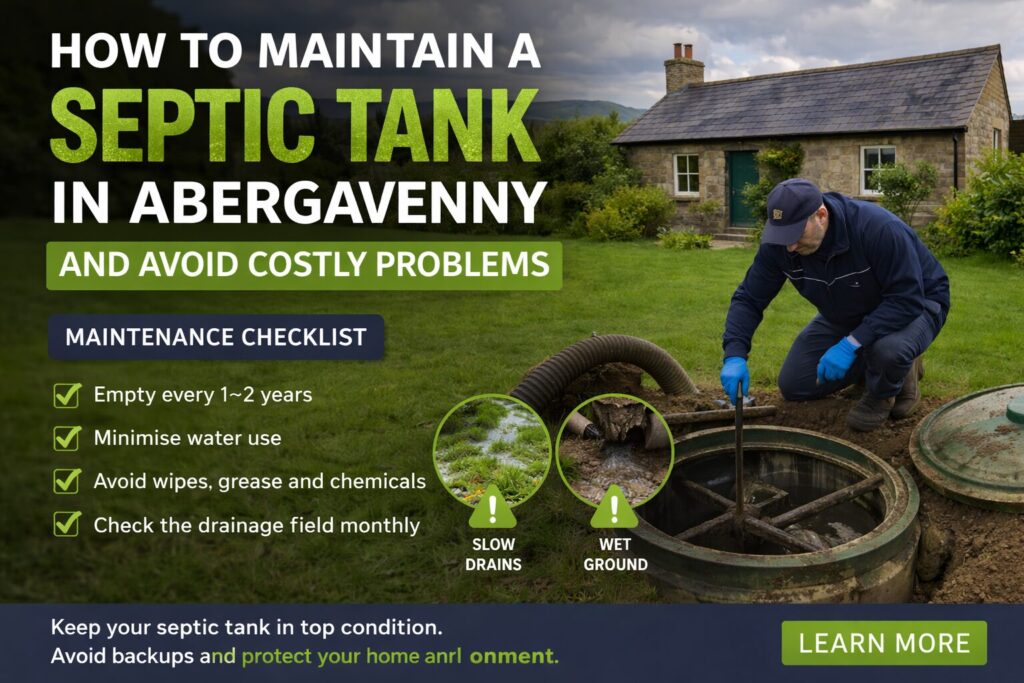
- empty the tank every 1 to 2 years
- avoid flushing wipes, grease and chemicals
- spread out water usage
- check the drainage field monthly
- act quickly if you notice any warning signs
Following this checklist can help you avoid most common problems and keep your system running efficiently.
Septic tank maintenance does not need to be complicated, but it does need to be consistent.
By keeping on top of emptying, being careful about what goes into the system, and checking for early warning signs, you can avoid many of the costly problems that homeowners face.
For properties in Abergavenny, following these simple steps will not only protect your system but also help ensure it stays compliant and works properly for years to come.
Get In touch
If you are unsure where to start, arranging septic tank emptying in Abergavenny is one of the simplest and most effective ways to keep your system in good condition.
Frequently Asked Questions
How often should I empty my septic tank in Abergavenny?
Most septic tanks should be emptied every 12 to 24 months based on Welsh guidance.
What is the biggest mistake homeowners make?
Waiting too long to empty the tank and flushing non-biodegradable waste like wipes and grease are the most common causes of problems.
What are the first signs of trouble?
Slow drains, gurgling sounds, bad smells and wet patches in the garden are all early warning signs.
Can I use bleach and strong cleaners?
Small amounts are usually fine, but frequent use can damage the bacteria inside the tank. Septic-safe products are a better option.
Do I need a professional to service my septic tank?
Yes. Emptying and servicing should always be carried out by a registered contractor.