
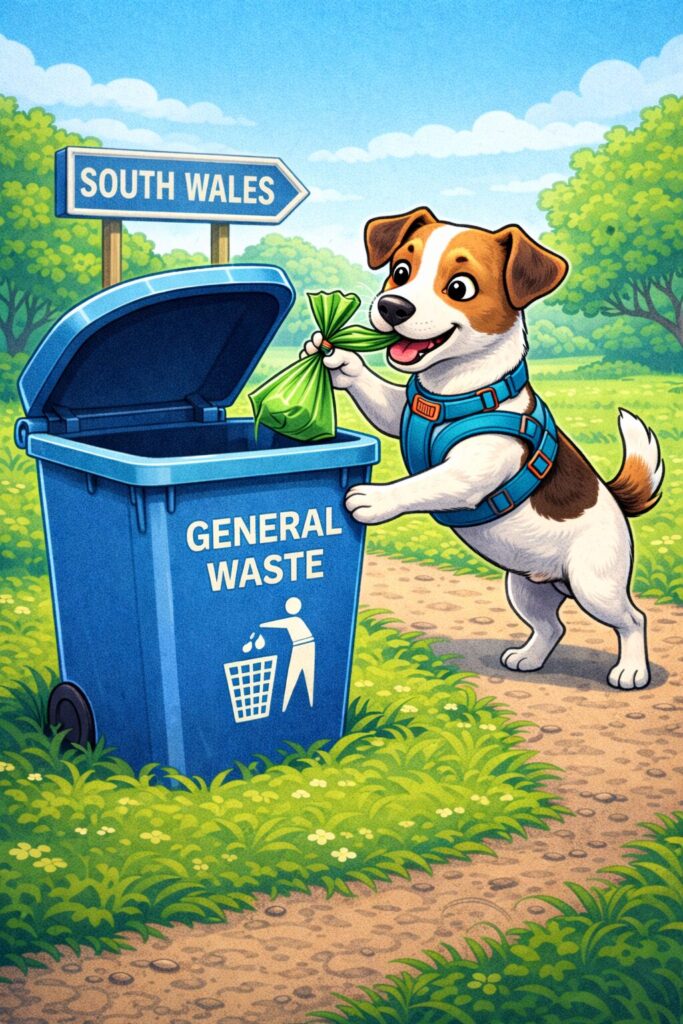
Where can I dispose of dog waste in South Wales?
If you own a dog in South Wales, knowing where dog waste can legally be disposed of is important for both public health and environmental protection. While most dog owners understand they should pick up after their pets, many people are unsure which bins they are actually allowed to use or what to do when there isn’t a bin nearby.
Across Wales, councils promote a simple rule: pick it up, bag it, and put it in general waste. In practice, that usually means placing bagged dog waste into a public litter bin while out on walks or disposing of it in your household black-bag waste at home. What you must not do is leave it on the ground, hang bags from trees or fences, or put it in the wrong bin.
In this guide, we’ll explain exactly where dog waste can be disposed of in South Wales, which bins are allowed, which ones you must avoid, and what options exist for homes, businesses and larger volumes of pet waste. If you want a full breakdown of the legal rules behind dog fouling, you can also read our guide to How to Dispose of Dog Waste Legally in South Wales.
Public Bins: The Easiest Way to Dispose of Dog Waste
When you’re out walking your dog in South Wales, the simplest place to dispose of dog waste is a public litter bin.
Many dog owners believe they must find a dedicated dog-waste bin, but most Welsh councils confirm that any public litter bin can be used for bagged dog waste. As long as the waste is properly sealed in a bag, it can be placed in a standard street bin or a dog-specific bin.
The key is to make sure the bag is securely tied before disposing of it. This prevents smells and keeps bins hygienic for everyone using public spaces.
Councils across South Wales promote a simple message: “grab it, bag it, bin it.” That means picking up dog waste immediately and placing it in the nearest suitable bin. If you’re walking in parks, town centres or residential streets, there will usually be a litter bin nearby.
However, if you can’t find a bin straight away, the responsible option is to take the bag home with you rather than leaving it beside a path or hanging it from a tree.
Disposing of Dog Waste at Home
If your dog uses your garden or you’ve brought waste home from a walk, the correct place to dispose of it is your general household waste bin.
Across South Wales, councils classify pet waste as non-recyclable residual waste. This means it should go in your black-bag or general waste wheelie bin, not in recycling or organic waste collections.
To reduce smells, many councils recommend double-bagging the waste, especially during warmer months or if your bin will not be emptied for several days.
Some local authorities also allow residents to dispose of bagged pet waste in the general-waste container at household recycling centres, which can be useful if you have multiple dogs and produce larger amounts of waste.
The important thing to remember is that dog waste should always be treated as general rubbish, never as recyclable or compostable material.
Bins You Must NOT Use
While dog waste can go in public litter bins or your household general waste, there are several bins that must not be used.
Dog waste should never be placed in:
Food waste bins
Garden waste bins
Recycling bins
These waste streams are processed differently from general rubbish. Food and garden waste are typically turned into compost or used in anaerobic digestion systems. Dog waste contains bacteria and parasites that can contaminate these processes and create health risks.
For the same reason, dog waste cannot be placed in recycling collections such as plastics, paper, glass or metal. Even if the waste is bagged, it still contaminates the recycling stream and may cause entire loads to be rejected.
The safest rule is simple: if it’s dog waste, it belongs in general waste only.
On Walks: Streets, Parks and the Countryside
When you’re walking your dog around South Wales — whether in a town centre, local park or countryside path — the responsibility to dispose of waste properly still applies.
Most councils advise dog owners to follow a few simple steps:
Always carry dog waste bags.
Pick up the waste immediately.
Tie the bag securely.
Place it in the nearest litter bin or take it home.
If there is no bin nearby, the correct thing to do is keep the bag with you until you find one or dispose of it in your household waste later.
One common mistake dog owners make is tying the bag and leaving it beside the path or hanging it from a fence or tree. Even though it might seem temporary, this is still classed as littering and can lead to fixed penalty fines from local authorities.
In short, once you bag it, the responsibility doesn’t end until it reaches a proper waste bin.
Garden Disposal and Dog Loo Systems
For many households in South Wales, most dog waste is produced at home in the garden rather than on walks. In these cases, the usual recommendation is to bag the waste and place it in your general household waste bin ready for collection.
Using sturdy dog waste bags — ideally recycled or compostable varieties — can help contain smells and make disposal more hygienic. If the waste will sit in your bin for several days, double-bagging can help prevent odours.
Some homeowners also choose to install a “dog loo” system in their garden. These are small in-ground units designed specifically for dog waste disposal. They work similarly to a mini septic-style chamber where the waste breaks down naturally over time.
However, these systems must be installed carefully and used according to the manufacturer’s instructions. They should be positioned away from edible plants, vegetable patches and water features to avoid contamination.
For households with multiple dogs, these systems can reduce the number of bags going into household bins, although they are not suitable for every garden or soil type.
Commercial Dog Waste and Professional Disposal Services
While most dog owners can dispose of pet waste through household rubbish, commercial situations are different.
Businesses such as:
Kennels
Dog walkers
Grooming salons
Pet-friendly venues
Dog parks or training facilities
often produce much larger volumes of dog waste. In these cases, the waste is classed as commercial waste and cannot be disposed of in standard household bins or taken to domestic recycling centres.
Instead, businesses must arrange collection through a licensed waste contractor who can transport and dispose of the waste in line with environmental regulations.
For organisations managing large amounts of dog waste, using a dedicated dog waste disposal service in South Wales can ensure the waste is handled safely, hygienically and in compliance with waste regulations.
Why Responsible Dog Waste Disposal Matters
Disposing of dog waste properly isn’t just about keeping streets and parks tidy. It also plays an important role in protecting public health and the environment across South Wales.
Dog faeces can contain harmful bacteria and parasites that pose risks to people, livestock and wildlife. When waste is left on the ground, rain can wash these contaminants into nearby drains, rivers and streams. In areas with farmland or natural habitats, this can contribute to water pollution and affect local ecosystems.
There are also practical impacts in public spaces. Dog waste left on pavements, parks or countryside paths creates hygiene problems and can make shared outdoor areas unpleasant for other residents and visitors.
By following the simple rule of pick it up, bag it and place it in general waste, dog owners help prevent these issues. Responsible disposal keeps public areas clean, protects local wildlife and ensures waste is handled safely through the normal waste management system.
Knowing where to dispose of dog waste in South Wales is straightforward once you understand the basic rules.
Bagged dog waste can be placed in any public litter bin while out on walks or disposed of in your household general waste bin at home. What’s important is making sure the waste is securely bagged and never placed in recycling, food or garden waste bins.
If you’re managing larger amounts of dog waste — such as for kennels, dog walking businesses or pet-friendly venues — you may need a professional dog waste disposal service to ensure the waste is handled correctly and in line with regulations.
For a full breakdown of the legal responsibilities for dog owners, you can also read our guide on How to Dispose of Dog Waste Legally in South Wales.
By following the simple “grab it, bag it, bin it” approach, dog owners can help keep South Wales’ streets, parks and countryside clean for everyone.
Get In touch
Contact Morgan’s Septic Tank Waste for any questions regarding Dog waste disposal in Monmouth
Frequently Asked Questions About Septic Tank Problems
Can dog waste go in any public bin in South Wales?
Yes. As long as the waste is securely bagged, it can be placed in any public litter bin. It does not have to be a specific dog waste bin.
What bin should dog waste go in at home?
Dog waste should go into your general household waste bin (black-bag waste). It should be bagged first, and double-bagging is recommended to reduce smells.
Can dog poo go in food or garden waste bins?
No. Dog waste must not be placed in food waste or garden waste bins because it can contaminate composting processes and pose health risks.
Can dog waste go in recycling bins?
No. Recycling collections are for materials like paper, plastics, metals and glass. Dog waste contaminates these streams and should only go in general waste.
What should I do if there is no bin nearby?
If there isn’t a bin available, you should take the bag home and dispose of it in your household waste bin. Leaving tied bags on paths, fences or trees is still considered littering.
Do dog walkers and kennels have different waste rules? environment?
Yes. Businesses such as dog walkers, kennels or grooming salons produce commercial waste, which cannot be disposed of in household bins. They must arrange collection through a licensed waste contractor.